What Is Preemption?
By Emma Cohen, Program Associate April 22, 2026
By Emma Cohen, Program Associate April 22, 2026
At Advancement Project, we work every day to support local movements in achieving policy and organizing wins within their communities and local governments. But all too often, states will interfere and take the wins away through a mechanism called abusive state preemption.
The U.S. Constitution specifies federal lawmaking power and leaves others up to the states. If a state does not claim specific power or delegates it to a locality, then the locality has the decision-making power over the issue. However, if the state leaves an unspecified issue to localities and they act on it, they may risk preemption by the state or its courts. Preemption isn’t always a bad thing; it can protect common-sense rights and liberties that protect minority groups or level the playing field, like national marriage equality for the LGBTQIA+ community or the Civil Rights Act. However, preemption is rarely used in this way, which is why we differentiate those impacts as results of abusive preemption.
What is abusive preemption?
Abusive preemption is a tool of white supremacy — with roots stemming from slavery — and state control that blocks communities, especially those of color, from building power and legislating effectively. Preemption occurs when a higher level of government, usually the state, blocks, overrides, or strips away power from a lower government, like a city or county. Dillon’s Rule is a legal concept that aids preemption.
Maria Robalino, organizer and leader of the Virginia Home Rule Project, explains Dillon’s Rule as “an obscure legal doctrine that says government and counties can do what the government gives them permission to do.” She says, “if the people demand [specific policy change], and the local government supports it, if the state legislature has not blessed it, it is not allowed.” These constraints do not mean that the boundaries cannot be pushed, but testing the extent of Dillon’s Rule with policy and social movements can often be high-risk and financially inaccessible, depending on the city or locality.
Organizations working on preemption, including Advancement Project, also use the phrases “power grab” or “takeover” to describe this issue. We often use this language to call out states who strip localities of their governance power. In 2023, we saw a state power grab in Mississippi when its state legislature passed HB 1020 to allow state officials to appoint special judges and prosecutors in the majority-Black Hinds County, which includes Jackson, Mississippi. The bill also permitted the Mississippi Capitol Police to take control of policing in part of Jackson, which increased the police presence in Black communities.

We’re also seeing a power grab in St. Louis, Missouri, where the state passed HB 495 to take over the St. Louis Police Department and its board of commissioners. In Houston, Texas, the state has taken over the Houston Independent School District (HISD), appointed a new school board that would act on only the state’s interest, and has closed countless schools, fired teachers, segregated classrooms, and influenced curriculum changes that harm student progress.
Preemption also looks like requiring immigration enforcement and signing 287(g) agreements; harming the LGBTQ+ community by removing state civil rights protections for queer and transgender folks of all ages, banning pride flags and the use of chosen pronouns; calls to nationalize voting and control voting methods, and more. (See the Legal Solutions Support Center’s 2026 Mid-Session Trends report for more.)
From a legal perspective, preemption is not neutral. It has been wielded as a tool of racial control and political suppression, targeting Black, brown, immigrant, and working-class communities who dare to reimagine power. There’s more than policy at stake; it’s the very principle of community self-determination and the ability of local communities to shape their own futures.
We have a few mechanisms at our disposal, and home rule is one of the most significant options.
Home rule is not an exact alternative to Dillon’s Rule, but it provides local governance powers to cities, counties, and localities and reduces state interference in local decision making. Home rule does not grant a locality absolute governing power – states still reserve some power for themselves—but it gives localities the power and agency to manage themselves, adopt their own ordinances, and tailor their government to suit their community most effectively.
We can fight for home rule through legislation and community organizing. Constitutional amendments and policy movements have led to home-rule powers being granted to all local governments in a state, not just a few. There are people-powered movements across the country fighting for self-governance at the state and city levels, including Free D.C.
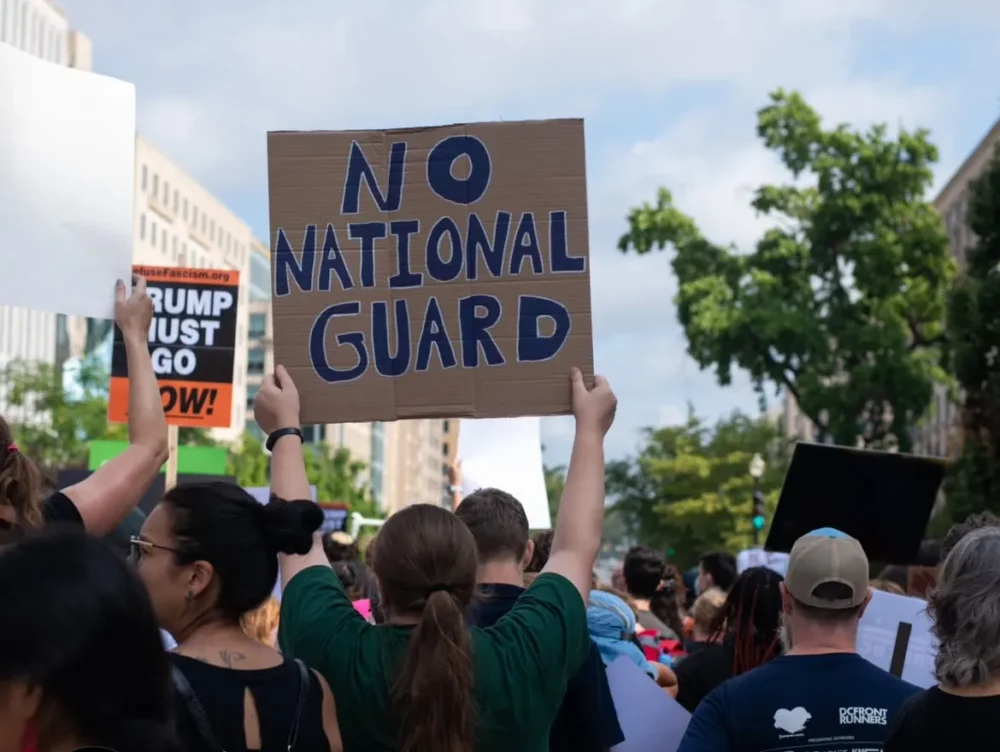
Washington, D.C., is an infamous example of abusive preemption. As our nation’s capital, D.C. does not have the ability to operate as a state. The city does not have a governor – only a mayor and a city council, as well as its own government agencies – but the city is managed as nothing more than a federal government entity and has no congressional representation with voting power, unlike the 50 states.
Free D.C. has trained and enlisted thousands of volunteers, organizers, and community members to join the movement for D.C.’s self-determination. It fights against decades of fundamental injustice to achieve dignity for their community, aiming to protect home rule in D.C. and fight for future D.C. statehood, when the city can make its own decisions about how it governs and not as a testing ground for government-inflicted violence. While Free D.C. continues to build power and solidarity, other states and cities, including the Virginia Home Rule Project, are currently fighting for home rule, and many have been successful.
The most powerful tool we have to fight abusive preemption is organizing to achieve home rule and the power of community self-determination. When people’s local power and rights are taken by states this results in bans on critical resources that leave people trapped or forced to relocate.
This cannot continue. Our communities must have the ability to fight back against abusive state and federal decision-making and protect their people.
All around the country, Black communities like those in Jackson and St. Louis, working class communities, and other communities of color are organizing against state power grabs and shaping what a real multi-racial democracy could like. Join us in this people-powered movement.