2026 Election Hub
Advancement Project’s 2026 Election Hub is your guide to knowing your voting rights and safety tips for safely participating in elections.
Advancement Project’s 2026 Election Hub is your guide to knowing your voting rights and safety tips for safely participating in elections.
Free and fair elections mean everyone, including Black, brown and immigrant communities, have unrestrained access to vote, and can cast their ballot without fear or intimidation. Democracy isn’t just something we inherit through law. It’s something we practice every day when we refuse to be silenced and abandon one another. Heading into the 2026 elections, we must take a stand for our multiracial democracy and fight to ensure every voter can safely cast their ballot.
Advancement Project’s 2026 Election Hub is your guide to knowing your voting rights and safety tips for safely participating in elections.
Make a voting plan!
Avoid any surprises before Election Day and take a few minutes to confirm your voter registration is up to date.
Visit the Election Protection website > select your state or territory > click on “Check Your Registration.”
Alternatively, you can also click here to check your registration.
CAUTION: DO NOT USE votesafe.org, a new website created to steal sensitive voter information. This is not a legitimate or secure voter status checkpoint. The safest way to check your voter registration is directly through your state or territory Board, Commission or Department of Elections.
Knowing where your poll site isn’t always easy. Sometimes poll sites close or change with little notice. It’s important to check your polling location information ahead of time.
You can find your early voting and Election Day polling sites by clicking here, where you’ll be redirected to state or territory polling site locators. Heads up: Your early voting site might be different from your election day site!
Absentee voting, also known as “mail-in voting,” is conducted by mail-in ballot before the day of Election Day. Voting by mail is safe and secure. Some states allow voters to return their mail/absentee ballots in a secure drop box.
Deadlines and conditions to request a mail ballot vary by state, so it’s safest to confirm your state or territory absentee ballot rules your state or territory Board, Commission or Department of Elections. You can also learn more about the absentee rules in your state by clicking here.
To track your mail-in or provisional ballot, click here.
If you or voters in your community encounter ANY issues while voting or trying to vote, report your concerns to 866-OUR-VOTE, (866-687-8683). A trained volunteer will assist you. You can also head to 866ourvote.org for more information on how to reach the hotline via text message, WhatsApp, or email.
The Election Protection hotline is led by the Lawyers’ Committee for Civil Rights Under Law, the nation’s largest non-partisan voter protection coalition.
For Election Protection hotline support in other languages, you can reach out to:
Elections don’t run on their own. They depend on thousands of ordinary people stepping up as poll workers, poll monitors, and legal observers to help ensure voting runs smoothly and safely for everyone. Poll workers keep polling places running by helping voters check in, managing voter lines, troubleshooting equipment, and more.
To volunteer as a poll worker, sign up with Power the Polls at powerthepolls.org.
Poll monitors and legal observers help observe and monitor election administration to ensure everyone can freely cast their ballot without fear or intimidation.
To volunteer as a poll monitor, sign up with the Election Protection coalition or with Black Voters Matter.
How we’re fighting to protect voters
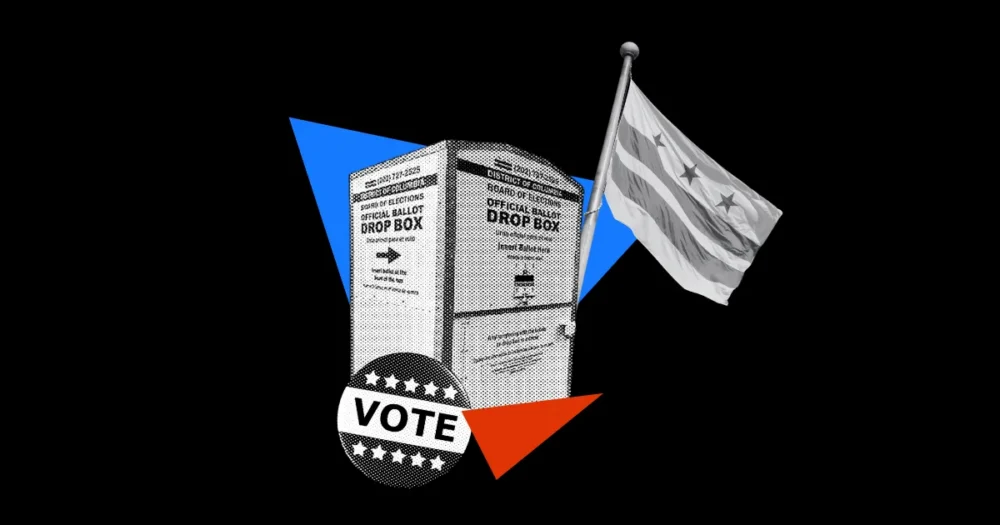
On October 16, 2026, the NAACP and Advancement Project filed a lawsuit, on behalf of the NAACP and three NAACP members, to block the Department of Justice (DOJ) from deploying federal prosecutors and other federal law enforcement to polling sites across the county as a part of its election monitor program. The DOJ’s plan stands to have a chilling effect on voters, cause chaos on Election Day, and disrupt the conduct of the election.
Learn more
On October 20, 2026, the League of Women Voters, represented by Advancement Project, filed an amicus brief in RNC v. Mi Familia Vota, asking the Supreme Court to protect the National Voter Registration Act of 1993 (NVRA). This case stems from the Arizona legislature’s efforts to expand voter purges in ways that undermine federal voter protections. If successful, weakening crucial protections of the NVRA will make it harder for voters to get on the rolls and easier to remove them, including just before an election.
Learn moreLearn with us!
Ahead of the elections, check out our People’s Dictionary, a political education series to help our communities understand the systems that oppress us as we work towards collective liberation.
When everyone, including Black, brown, and historically marginalized communities, have unrestrained access to vote, and can cast their ballot without fear or intimidation.
See More From the People's Dictionary
A political system where people of all races and backgrounds have a say in the decisions shaping our lives and come together to share power and create a future that belongs to all of us.
See More From the People's Dictionary